Body Blocking: Stop a Big Dog Barging Through the Door
Hauling your dog back by the lead makes him pull harder. Body blocking stops a big dog barging through doors with no tug of war. The steps, and when not to.
Dami Randle · · 7 min read
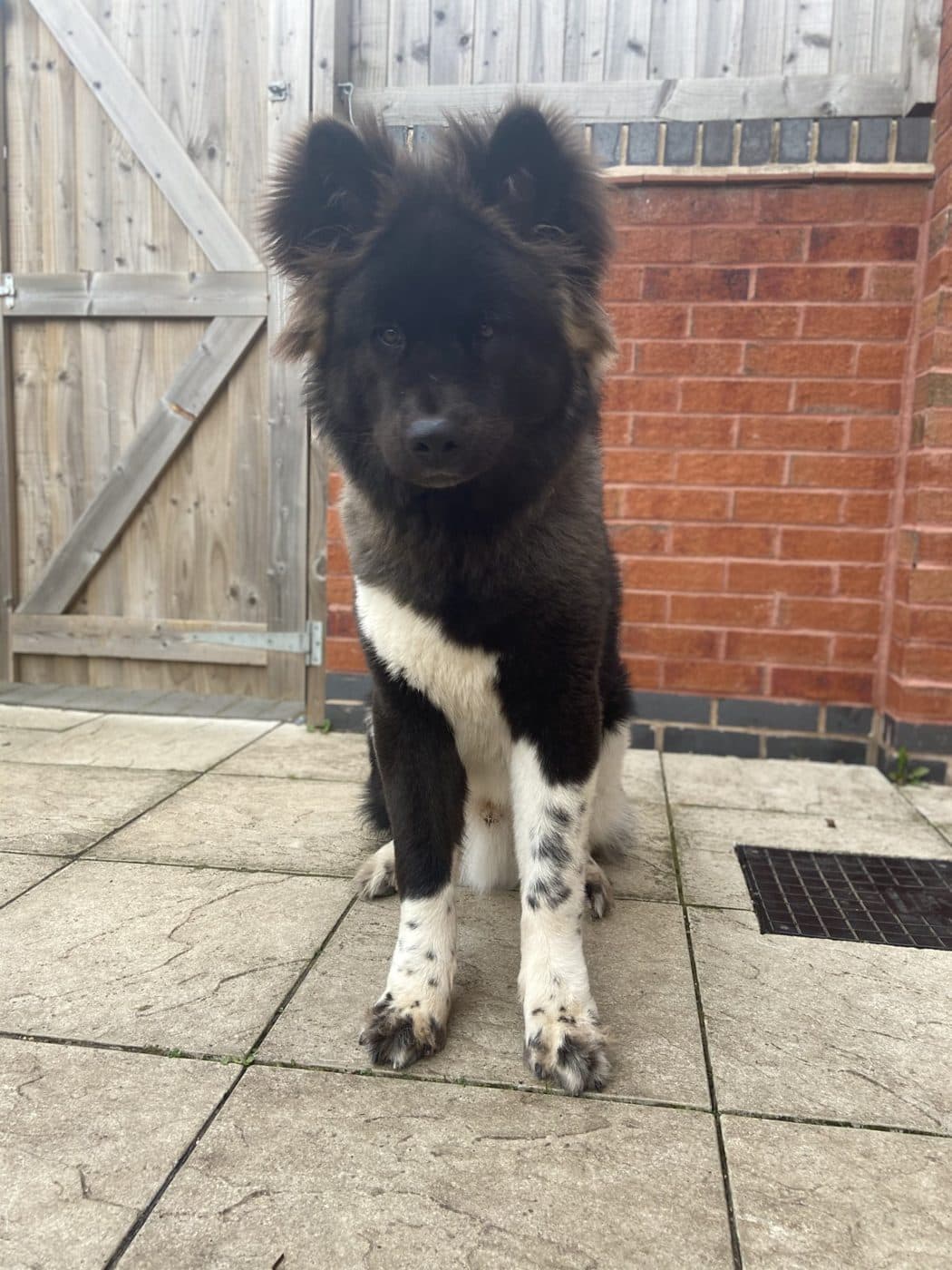
The front door opens. Shango, who is a big dog with a lot of go in him, sees the gap and goes for it. My hand, before my brain has a vote, hauls him back by the lead.
He hauls forward harder. Of course he does. Dogs push back against a steady pull. Haul a dog and he hauls the other way; lean on him and he leans into you. Trainers call this the opposition reflex, and a 50 kilo Akita has it in industrial quantities.
A short pop on the lead to break his focus has its place. Hauling on him and holding on is the bit that turns a doorway into a tug of war, and it is the bit I did. The lead stopped him reaching the road. It taught him nothing.
I know this. I teach this. And last Tuesday I watched my own hand do it anyway, with a book in my ears telling me exactly why.
The book
The Other End of the Leash by Patricia McConnell, a zoologist and applied animal behaviourist, came out in 2002. I have been listening to it on the morning walks this week, and I am slightly annoyed nobody made me read it earlier.
Her big idea is simple. We are primates. We talk, we reach, we hug, we grab. Dogs are not. They say almost everything with their bodies and the space between them, and they read ours the same way whether we mean it or not. Most of what goes wrong between a person and a dog is a translation problem, and the person is the one with the accent.
McConnell gave me the language for what follows. The step-in-and-release drill below is how I use it with my own dogs, not a summary of what she teaches.
What a dog would have done
Watch two dogs who know each other meet in a narrow gap on a path. Nobody barks a paragraph. One walks up, stands still, leans a little into the space. The other either holds it or gives way. The whole conversation is bodies and the gap between them.
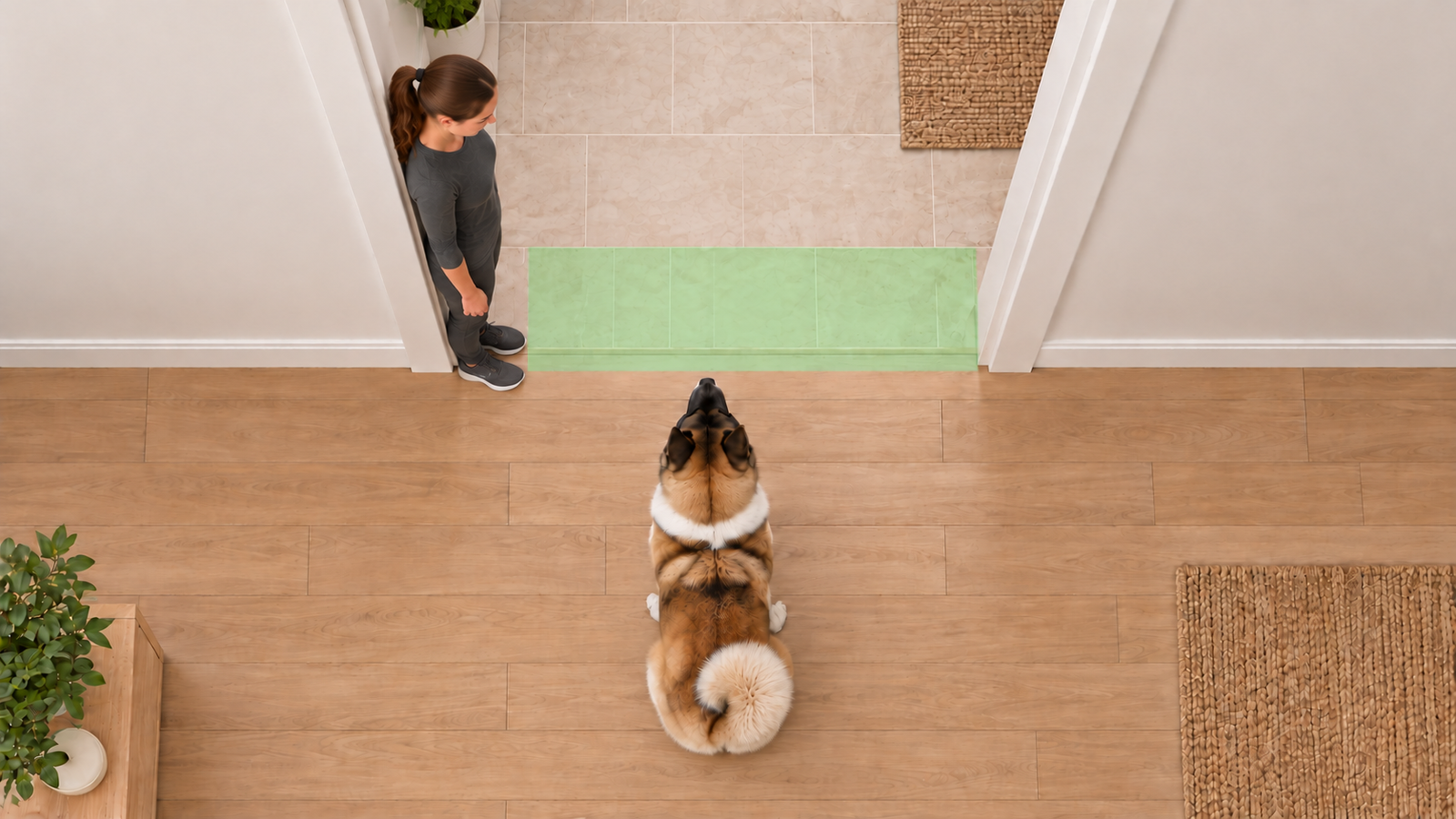
That is body blocking, and it is the move I should have made at the door. You step into the space the dog wants, while he is still walking towards it. Feet planted, facing him, hands still, mouth shut. You stand there. If he tries to go round, you shift one small step to fill that side. Then, the instant he stops, sits or looks up at you, you say "yes", give him a treat, and turn your side to him so the space opens again.
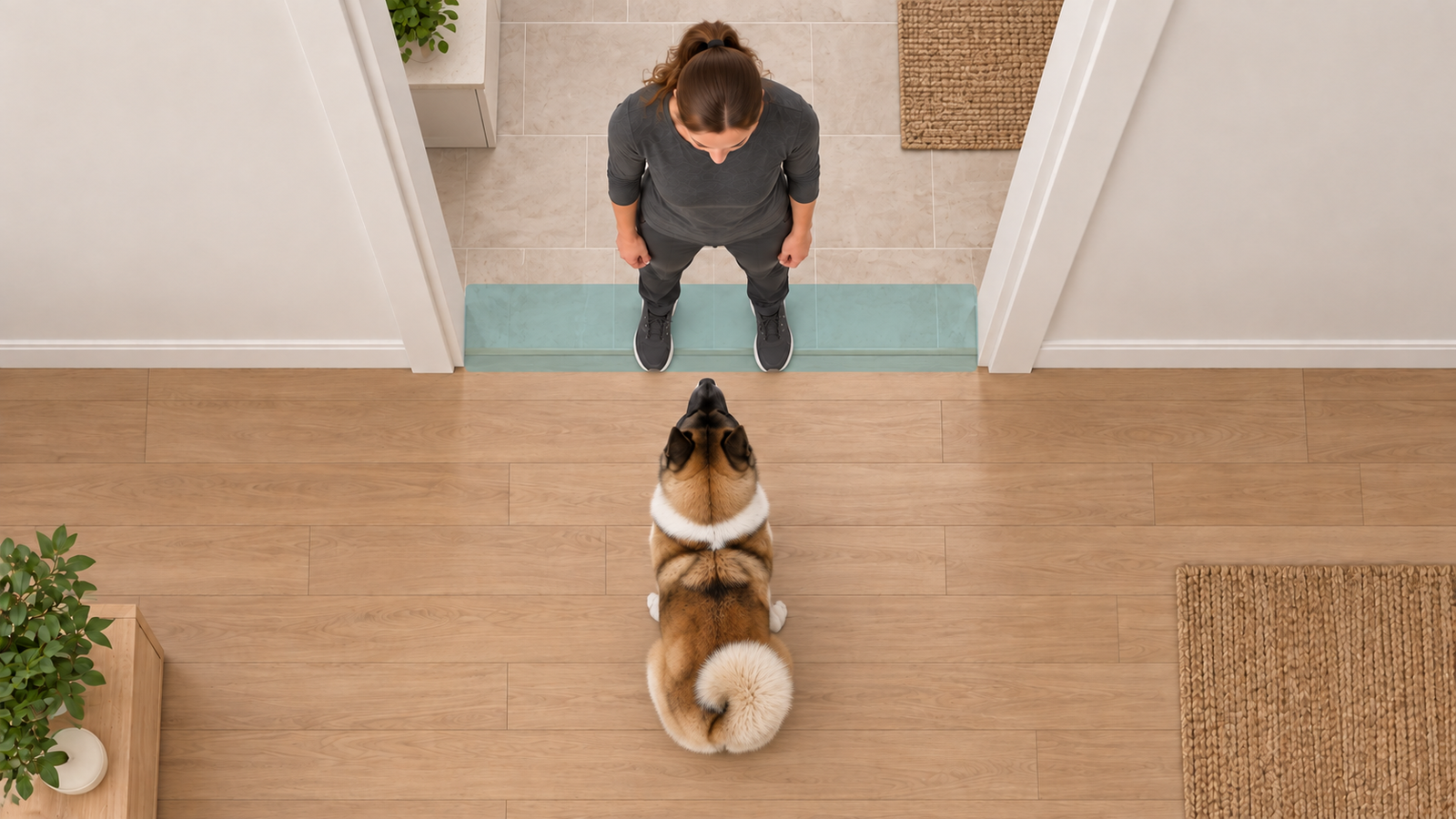
Practise it at an inside door first, where a dog who gets past you ends up in the kitchen, not the road. At the front door the lead stays clipped on as a safety line, held still and slack, never used to steer. Beyond that, no words. A dog reads a body stepping calmly into his path faster than he will ever learn a sentence.
Why it works where hauling does not
Think about someone holding a door open for you. Nothing is said, but you walk through, because the space was offered. Now picture them stepping into the gap and standing still. You stop, out of manners.
Your dog has no manners to fall back on. He learns from what happens next. Pushing forward keeps the gap closed. Stopping opens it. After a few goes he tries stopping first, because stopping is what opens the door. That is the whole lesson.
A planted body is still pressure. The difference from hauling on the lead is that it gives him no tug to fight, and it opens the instant he gives way, so leaning on you never pays.
Two details carry it. The first is stillness. A block is standing still, not shoving. If you are walking backwards you are not blocking, you are retreating, and he knows it.
The second is the release. The moment he stops, you give the space back. That is the lesson. A gap that never opens teaches nothing. A gap that opens the second he sits teaches him exactly how to open it.
Where I use it now
Once you see it you use it everywhere. Inside the house the dog is loose for all of this; the lead only comes out at the front door.
- The front door. A visitor arrives. The dogs are on a lead or behind the gate before the door opens, and I step into the gap before they do. They have learned to wait, because waiting is what opens the door.
- The sofa. Step between the dog and the cushion before he jumps, so there is nothing to haul him off. Prevention beats correction.
- The kitchen. A quiet step into his path as he heads for the counter. No raised voice needed, which he would ignore anyway.
- Children. My body between a keen dog and a toddler buys a second. It sits alongside a baby gate and an adult watching, never instead of them.
- Another dog on the path. If Atlas is keen to say hello, stepping calmly in front of him tells him I have this one. If a dog is stiff or fixed on another dog, that is a different animal: he gets distance, not a block.
When you do not do it
This is for a keen dog pushing forward. It is never for a worried one. If your dog hangs back from the door, crouches, tucks his tail, freezes, or barks with his weight on his back legs, he is frightened, and stepping into a frightened dog's space makes the fear worse. Give him room and pay him for coming closer on his own terms.
Never step in front of a dog who is already running. A big dog at speed will go through you or over you. Step aside, let the closed door or the lead do the stopping, and start again with the door half open. No blocks on the stairs or a wet floor, and if your dog could knock you over, a door or a gate does the job instead of your body.
Never block a dog who has gone still, stared hard, growled or snapped over food, a toy, a bed or the sofa. Backing a dog into a corner over something he thinks he must defend is how people get bitten. That one is vet first, then a registered behaviourist in person, not a blog post.
One more: do not loom. Bending over a dog, staring into his eyes, leaning in with your face, is a threat in his language, not a boundary. Stand up straight. Let your position do the talking.
Two more things her book made me notice
- Lean forward and most dogs stop. Lean back, turn your side to him and move away, and most dogs come. If your recall is slow, check your shoulders before you blame the dog.
- Facing a dog head-on feels pushy to him; side-on feels friendly. A stranger walking straight at your dog with a hand out is being rude in dog, and a nervous dog may tell them so. I now ask visitors to turn a little and let him come to them.
The Learn tab in the app has a new lesson on all of this, under Boundaries, Crates and Clear Cues, with pictures. The exercise is Body Block, in Impulse Control: five goes at an inside door is a full session, three on a busy day, and your dog does not need a lead for it. The steps are pictures for now. A short video of each might be better, and there is a one-tap poll just below.
Shango still goes for the gap. The difference is that my hand stays still now, my feet move instead, and he sits.
Where does your dog push through first, and what do you do when he does?